As solar energy becomes increasingly popular, many homeowners and business owners face an important question: Should you choose an On-Grid or an Off-Grid Solar System? While both systems harness the power of the sun to generate clean electricity, they are designed for different energy needs and applications.
Understanding the differences between these two types of solar systems will help you make an informed decision and maximize the benefits of your investment.
What is an On-Grid Solar System?
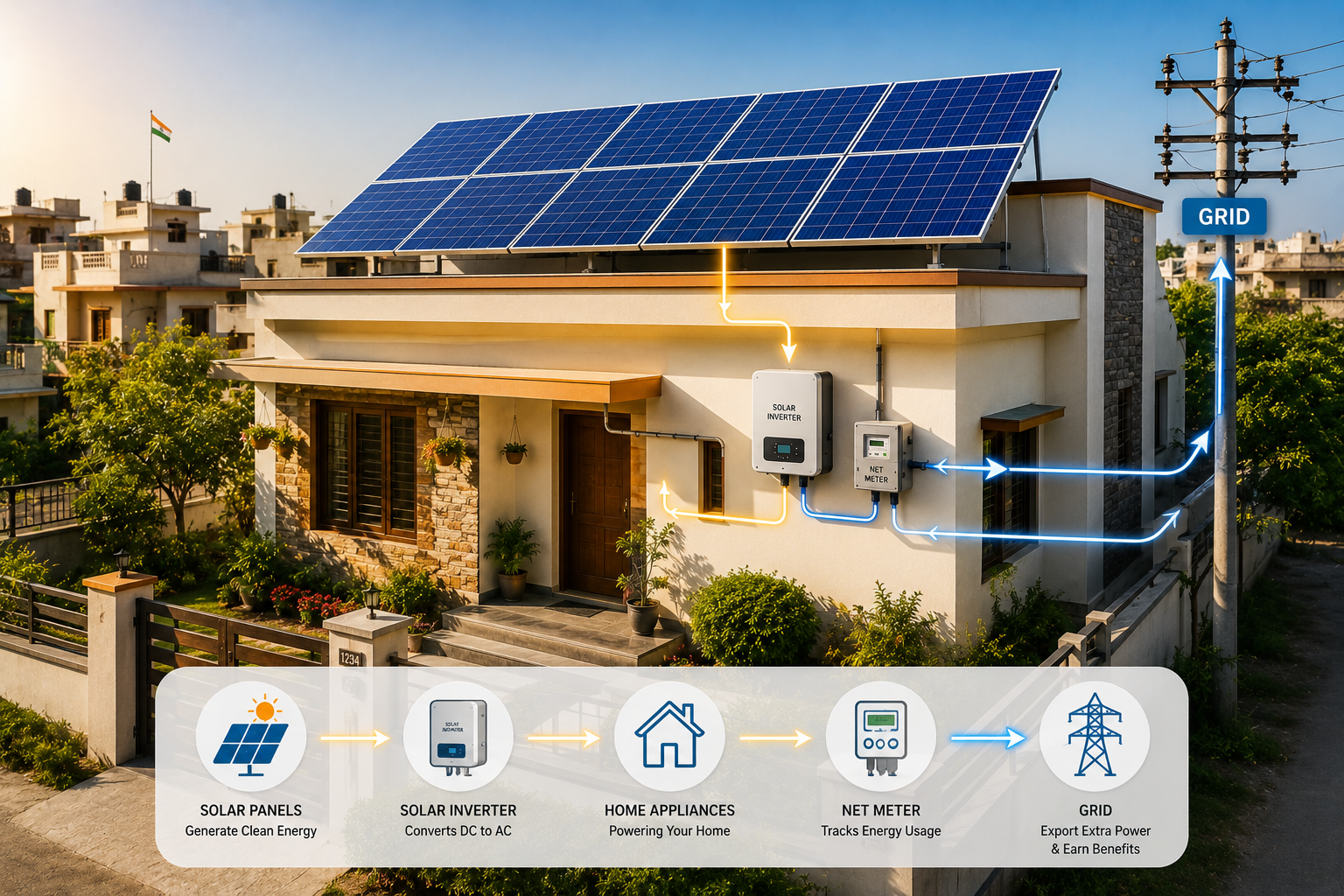
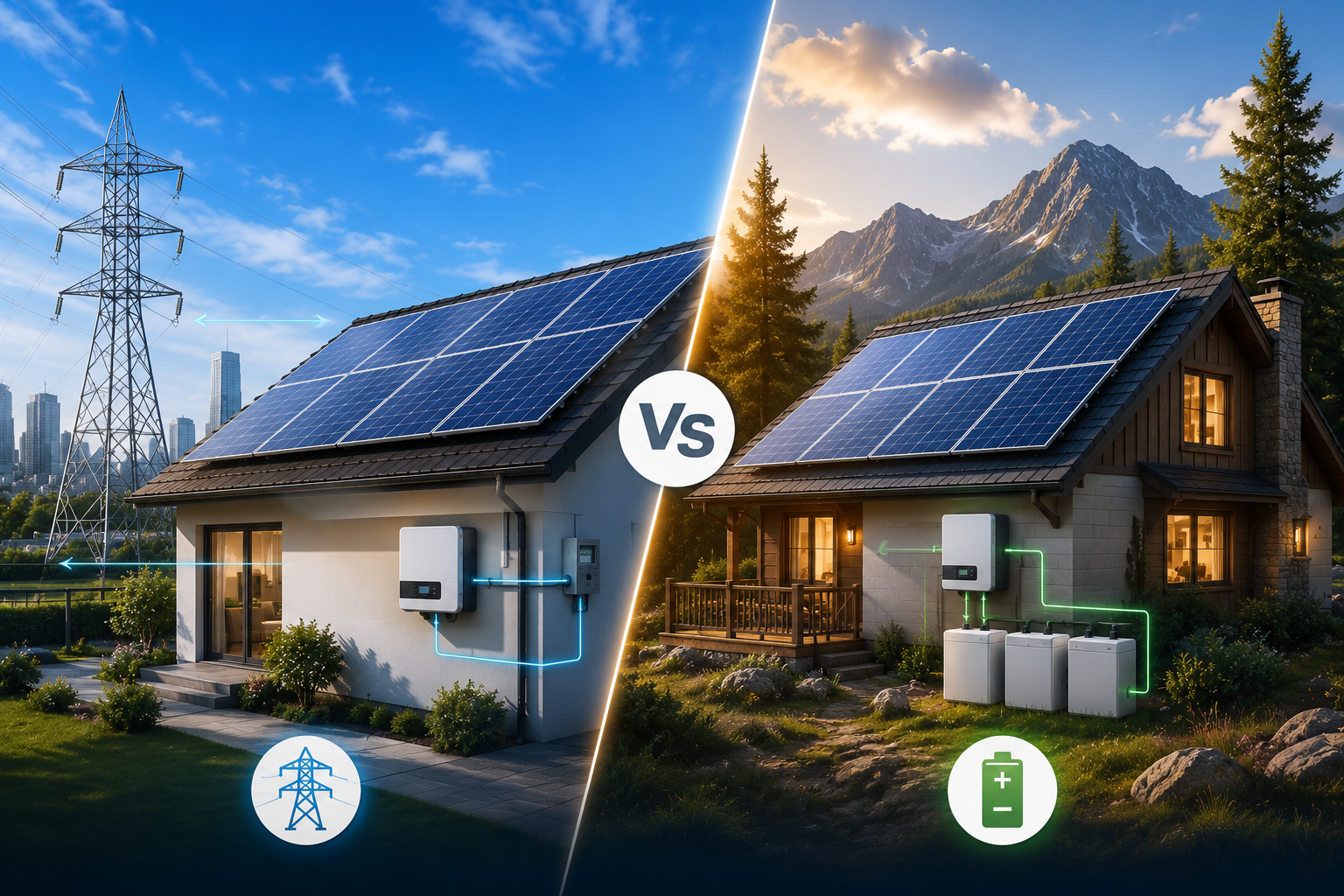
An On-Grid Solar System, also known as a grid-tied solar system, is connected directly to the local electricity grid. During the day, solar panels generate electricity to power your property. If your system produces more energy than you consume, the excess electricity can be exported to the grid through net metering (where applicable). When solar production is low, such as at night or during cloudy weather, electricity is supplied from the utility grid.
Benefits of On-Grid Solar
- Lower monthly electricity bills
- No need for battery storage, reducing installation costs
- Net metering benefits where available
- High system efficiency
- Low maintenance requirements
- Faster return on investment
- Ideal for urban and suburban locations with reliable grid connectivity
What is an Off-Grid Solar System?
An Off-Grid Solar System operates independently without being connected to the electricity grid. It uses solar panels along with battery storage to provide electricity whenever needed. These systems are commonly installed in remote areas where grid power is unavailable or unreliable.
Benefits of Off-Grid Solar
- Complete energy independence
- Reliable electricity in remote locations
- Battery backup for uninterrupted power
- No dependence on utility providers
- Suitable for farms, rural homes, resorts, telecom sites, and construction projects
- Long-term energy security
Key Differences Between On-Grid and Off-Grid Solar
|
Feature |
On-Grid Solar |
Off-Grid Solar |
|
Grid Connection |
Connected to the utility grid |
Operates independently |
|
Battery Requirement |
Usually not required |
Required |
|
Electricity During Grid Failure |
Typically unavailable unless paired with backup solutions |
Available through battery storage |
|
Initial Investment |
Lower |
Higher due to battery costs |
|
Maintenance |
Low |
Moderate |
|
Best For |
Homes, offices, commercial buildings |
Remote homes, farms, rural areas, industrial sites |
Which Solar System Should You Choose?
Choose On-Grid Solar If:
- You have a reliable electricity connection.
- Your primary goal is to reduce electricity bills.
- You want a cost-effective solution with faster payback.
- You can benefit from net metering where available.
Choose Off-Grid Solar If:
- Your location has no access to the electricity grid.
- You experience frequent power outages.
- You need complete energy independence.
- You require uninterrupted power in remote locations.
Why Professional Solar Design Matters
Every property has unique energy requirements. Factors such as electricity consumption, roof space, shading, location, and future energy needs should be evaluated before selecting a solar system. A professionally designed solution ensures maximum energy generation, better performance, and long-term savings.
Why Choose 3DR Solar?
At 3DR Solar, we provide customized on-grid, off-grid, and hybrid solar solutions for residential, commercial, industrial, and institutional customers. Our experienced team handles everything from site assessment and system design to installation, commissioning, and ongoing support.
We use premium-quality solar panels, advanced inverters, and proven installation practices to deliver reliable, efficient, and long-lasting solar power systems.
Conclusion
Both on-grid and off-grid solar systems offer excellent benefits, but the right choice depends on your location, energy requirements, and budget. An on-grid system is ideal for reducing electricity bills in areas with reliable grid access, while an off-grid system provides complete energy independence in remote locations.
Whether you’re planning to power your home, business, or industrial facility, 3DR Solar can help you choose the most efficient and cost-effective solar solution. Our expert team is dedicated to helping you achieve long-term energy savings while contributing to a cleaner and more sustainable future.